
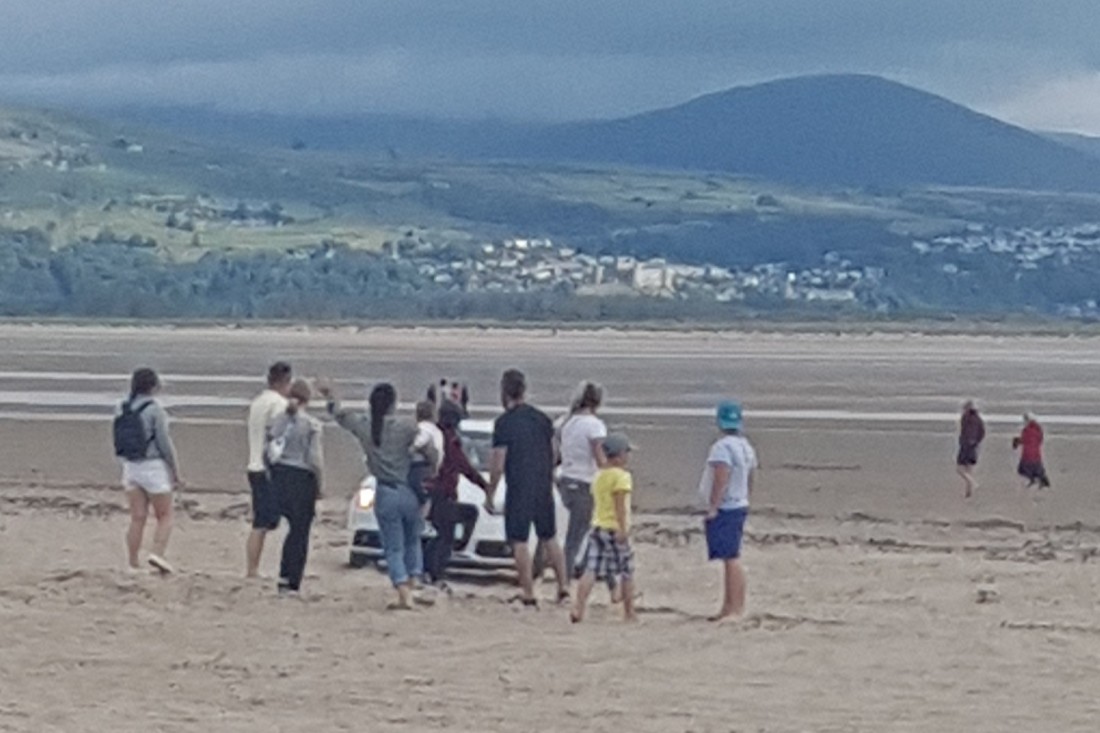
Freeing your car ? Stuck in the sand ?
Picture the scene. You’ve had a fun filled day on the beach and its time to head home, sandy, sleepy, and maybe a little sunburnt.
You’ve pack up the car, strapped the kids in to their seats and switched on the engine.
Nothing.
You’re wedged in the sand.
It’s a scenario that would leave even the most chilled-out of people feeling a sense of panic.
Which begs the question...what on earth do you do to free your vehicle in this situation?
It goes without saying that a four wheel-drive reduces the risk of becoming stuck in the first place, but of course, not all cars are equipped with this feature.
So it makes sense to follow the Boy Scouts’ example and go prepared-
Tools to Bring on a Beach Driving Trip
Whenever you plan a driving trip to the beach, make sure to pack these sand essentials:
· Shovel
· Traction mats
· Tow straps
· Rope (14’ or longer)
· Couple of gallons of water
· Spare tyre
· Tyre pressure gauge
Steps to Take If You Get Stuck in the Sand
Step 1. Don’t Accelerate!
While it’s tempting to go full throttle on the accelerator, this could cause the tyre to spin and dig you in deeper. It’s best to stop and weigh up the situation rather than flooring it in an attempt to power through.
Step. 2 Use your Traction Mats.
Remember to place the traction mats behind the rear wheels if your vehicle is rear wheel drive and vice versa for front wheel drive.
Now slowly reverse or drive forward as appropriate. .
If that doesn’t work. . .
Step 3. Get ready to start shovelling
Deep sand requires a little bit more exertion to get out of once you’re stuck. Use the shovel to dig in front of each tyre. Make a hard-packed path that extends at least a few feet in front of the tyres. You’ll also need to clear the sand away from beneath the underside of the vehicle before trying to drive out. The less sand that’s touching your vehicle, the less resistance there will be.
Step 4. Lay Out the Traction Mats
Once you shovel sand away from the tyres, lay down the traction mats again, and try to drive out slowly. Avoid hitting the accelerator and the brakes.
Step 5. Wet Down the Sand
If you still can’t get enough traction, try wetting down the sand. HOWEVER, don’t use the water from your water containers- that’s reserved for the engine if it overheats. Hopefully, there’s sea nearby that can be used to wet the sand so it sticks together and is easier to drive across.
Step 6. Let a little air out of the tyres
You can also let some (not all!) of the air out of the tyres, to create a greater surface area and increase the chances of the tyre getting unstuck. Let about half of the air pressure out. If you have a pressure gauge let the air out until the tyres are about 15-18psi.
Step7. Lowest gear
Start the engine and put the vehicle into either reverse or its , depending upon the direction you're going. Have two or three strong assistants push on either the bonnet or the boot. On the count of three, have them shove while you floor the accelerator.
(Remember to caution them against standing behind the tyres as whatever you are using for traction can fly out the back if your efforts are successful.)
This isn't a time to be ginger with the throttle; getting out of mud and sand demands wheel speed, horsepower and momentum, not low-speed torque.
Once you get going, try to keep moving to maintain momentum.
Step 8. Get a Tow
If all of your efforts still haven’t got you out of the sand, it’s time for outside assistance. Get your tow straps and rope, and then look for a kind soul with a 4WD vehicle.
Step 9. Failing that, call the professionals!
if the tide is coming in and you still can’t get free, just remember that the safety of passengers and driver are paramount. Be sure to call a breakdown assistance company or the local beach patrol and ask for help before it’s too late.